Choosing the Right Educational Resource: An Analysis of Number Tracing Practice KDP Interiors
For educators, parents, and entrepreneurs looking to support early learning, the choice of resources is a critical decision. Among the many options available, pre-designed interiors for self-publishing platforms like Amazon KDP (Kindle Direct Publishing) have gained significant traction. Products such as Number Tracing Practice KDP Interiors represent a specific category aimed at providing ready-to-use, formatted content for creating practice books. Understanding what this offering entails, and where it fits within the broader landscape of educational tools, requires a balanced look at its structure, intended use, and the trade-offs involved.
The Core Concept of Ready-to-Publish Tracing Interiors
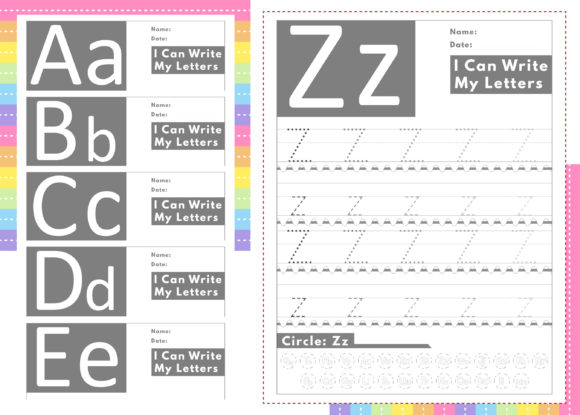
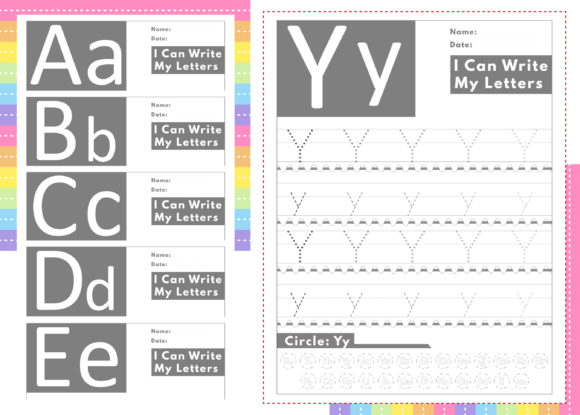
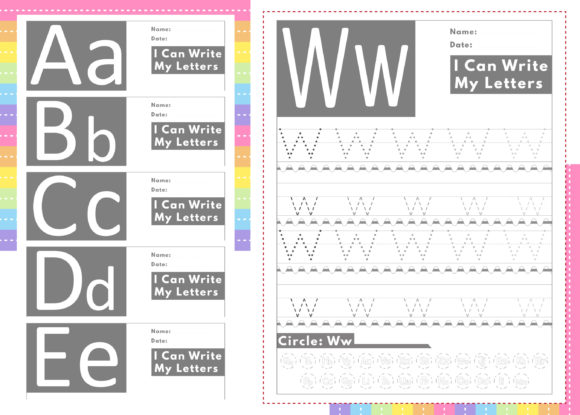
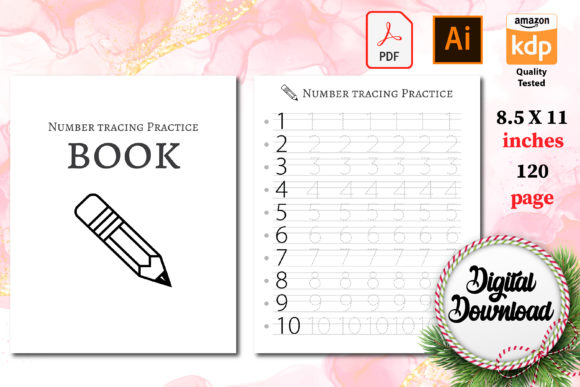
Number Tracing Practice KDP Interiors is not a physical book, but a digital product. It is a collection of professionally formatted files designed to serve as the interior pages of a practice workbook. Typically, these packages include a series of pages featuring numbers with traceable dotted lines, often accompanied by guiding elements or simple illustrations. The key distinction from a simple worksheet found online is its completeness and technical readiness. The files are pre-formatted to the standard KDP trim size of 8.5 x 11 inches, tested for compatibility, and supplied in multiple file formats like PDF, PNG, and JPG. This means the buyer receives a product that is intended to be uploaded directly to KDP with minimal technical adjustment, or printed locally for personal use.
How This Format Compares to Other Educational Tools
When evaluating Number Tracing Practice KDP Interiors, it's useful to consider it against other common approaches. One alternative is creating custom worksheets from scratch using design software like Adobe Illustrator or Canva. This offers unlimited flexibility in style, content order, and additional activities. However, it demands significant design skill, time investment, and understanding of publishing specifications. Another common route is purchasing physical workbooks from educational publishers. These are finished products, often researched and sequenced by experts, but they offer no customization or opportunity for personal branding or resale.
The KDP interior product sits between these poles. It provides a structured, print-ready foundation but within a commercial framework. The user acquires a template, not a finished branded book. This makes it a potential fit for someone who wants to publish their own titled workbook on Amazon quickly, or for a teacher or parent who wants high-quality, consistent practice sheets for home or classroom printing without daily design work. The trade-off is a limitation in content modification; while you can add covers and compile the PDF, altering the core tracing pages within the provided formats might be difficult unless you work with the Illustrator file, which requires corresponding software expertise.
Evaluating the Strengths and Practical Use Cases
The primary strength of a resource like Number Tracing Practice KDP Interiors is its reduction of technical barriers. For an individual exploring KDP publishing, formatting issues can be a major hurdle. A product that is already "100 formatted and tested for KDP" addresses that pain point directly. The inclusion of multiple file formats (PDF, Illustrator, PNG, JPG) also adds value for different use cases. The PDF and image files allow for immediate printing or upload, while the Illustrator source file offers potential for advanced users to make adjustments, though this requires professional design knowledge.
A realistic example of its best-fit application might be a small tutoring business looking to create a branded supplementary workbook for their students. Using these interiors, they could efficiently produce a professional-looking practice book without hiring a designer. Similarly, a parent homeschooling a child might find the 120-page PDF a convenient repository of ready-to-print activities, saving time scouring various websites for uneven quality worksheets. The high-quality, print-ready aspect ensures the final product has clean lines and consistent layout, which is important for young learners developing fine motor skills.
Considerations and Potential Limitations
While the convenience is clear, there are important factors to weigh. The content is fixed—it is specifically number tracing practice. If your goal is to create a comprehensive early math book that includes counting exercises, matching, or shape recognition, this product alone would be insufficient. It serves a singular, focused purpose. Furthermore, the aesthetic and pedagogical approach is predetermined. Some tracing resources use guided arrows, start dots, or incorporate related imagery; others are minimalist. Evaluating the sample pages or description is crucial to determine if the style aligns with your educational philosophy or the learner's needs.
Another consideration is the commercial context. Since these interiors are often purchased for KDP publishing, users must ensure their use complies with Amazon's content policies and that they understand the process of creating a unique book cover, setting a price, and handling distribution. Simply having the interior files does not guarantee successful sales; it is a component in a larger publishing process. For purely personal use, the value proposition shifts to the cost versus the time saved compared to free online resources, which may vary greatly in quality and require compilation effort.
Decision Factors: When Is This the Right Choice?
Determining whether Number Tracing Practice KDP Interiors is the right resource depends heavily on your primary objective and resources.
- For KDP Publishers: If you are an entrepreneur or educator seeking to launch a number tracing workbook on Amazon with minimal design overhead, and you are comfortable with the predefined content scope, this type of product can be an efficient starting point. It is particularly suitable if you possess marketing skills but lack design time or expertise.
- For Educators and Parents: If you require a large volume of consistent, high-print-quality practice sheets for immediate use, and the cost is justified by the time saved from designing or curating free resources, this downloadable package can be practical. The instant access to 120 pages in a PDF format is a key benefit here.
- For Content Creators and Designers: If you have strong skills in Illustrator and seek a base template to customize extensively, the inclusion of the Illustrator file might provide value. However, if your vision requires a fundamentally different tracing style or integrated multi-sensory activities, starting from scratch or choosing a more flexible template might be a better path.
When Another Option Might Be Necessary
There are clear scenarios where a different approach would be more appropriate. If your project requires an integrated curriculum—where number tracing is just one part of a sequenced learning unit that includes auditory, visual, and tactile elements—a specialized educational workbook from a established publisher or a custom-designed solution would likely serve better. Similarly, if your aim is to create a free resource for a community website or a highly adaptive tool for children with specific learning needs, the fixed format of a pre-made interior may be too restrictive.
Furthermore, if budget is a primary constraint and design time is not, numerous free worksheet generators and public domain resources exist. Their quality and consistency require vetting, but they offer a zero-cost alternative. The choice, therefore, hinges on balancing quality, time, money, and control. Products like Number Tracing Practice KDP Interiors occupy a distinct niche by offering controlled quality and convenience for a fee, effectively trading flexibility for speed and professional presentation.
Making an Informed Selection in a Crowded Market
The market for downloadable educational resources is vast. Beyond tracing interiors, one finds bundles covering alphabets, words, shapes, and full curricula. When comparing, look beyond page count. Assess the file formats provided—do they match your technical capabilities? Examine the design quality from samples: are the tracing lines clear and appropriately spaced for young children? Consider the license terms: are you permitted to use the files for commercial publishing, or only for personal print? These factors are as important as the raw number of pages.
Ultimately, selecting a resource such as Number Tracing Practice KDP Interiors is a pragmatic decision. It is not a one-size-fits-all solution, but a tool optimized for specific scenarios. By understanding its role as a ready-made, technically compliant digital product, and honestly assessing your own needs for customization, time, and end-use, you can determine if it aligns with your goals. Whether for publishing a supplementary learning tool on a major platform or streamlining the creation of home practice materials, its value lies in its specialization. For those whose situation matches that specialization, it can eliminate significant friction; for others, it may simply highlight the need for a more tailored or comprehensive alternative.