The Hidden Power of Templates for KDP Interiors for Kids
If you’ve ever thought about creating a children’s coloring book, activity journal, or storybook for Amazon’s Kindle Direct Publishing platform, you know the mountain of technical details can feel daunting. This is where Templates for KDP Interiors for Kids become a powerful ally. They aren’t just decorative layouts; they are precise, pre-built frameworks that ensure your final product meets Amazon’s strict formatting requirements, saving you hours of potential frustration and costly errors. For creators, educators, and small business owners, using these templates means you can focus on your content’s creativity and educational value, rather than wrestling with software settings.
Common Oversights in Choosing Kids Interior Templates
Many newcomers gravitate towards templates based solely on visual appeal—the cute graphics or fun fonts. While design matters, overlooking the technical specifications embedded in a template is a critical mistake. A beautiful template that doesn’t adhere to KDP’s exact trim size, margin guidelines, or resolution standards will result in a rejected upload or a poorly printed book. The visual charm is the icing on the cake, but the cake itself must be structurally sound.
Mistake 1: Ignoring the "No Bleed" Specification
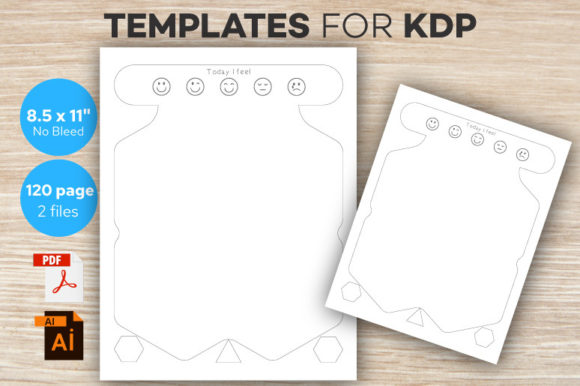
One of the most frequent misunderstandings revolves around the term “bleed.” A bleed area is extra image that extends beyond the trim edge, ensuring full-color backgrounds print perfectly even if the paper shifts slightly during cutting. For many illustrated children’s books, bleed is essential. However, the specific Templates for KDP Interiors for Kids Gratitude Journal mentioned here are designed for No Bleed. This means all content is safely contained within the final page borders. If you attempt to use a no-bleed template for a project that requires full-page background art, you’ll end up with unsightly white borders or cropped images. Conversely, forcing bleed into a no-bleed template will cause formatting chaos. Always match the template’s bleed setting to your project’s visual needs.
Mistake 2: Underestimating File Format Flexibility
A template package offering only a single PDF file is limiting. The inclusion of an AI and EPS file, as seen in this package, is a significant advantage often overlooked. The PDF is your ready-to-upload final file. The AI (Adobe Illustrator) and EPS files are your editable source files. If you only have access to the PDF, you cannot easily change the page count, alter the layout structure, or replace placeholder graphics without complex software. Having the source files means you can adapt the 120-page framework: maybe you only need 80 pages for your gratitude journal, or you want to redesign a section. It grants true ownership and adaptability, turning a static template into a dynamic starting point.
The Practical Impact of Technical Errors
When these details are mishandled, the consequences are real and frustrating. Uploading a file with incorrect dimensions or resolution can lead to Amazon’s automated review system flagging your project, delaying your launch for days while you troubleshoot. A book printed with misaligned margins or low-resolution images looks unprofessional and disappoints customers. For a gratitude journal aimed at children, poor presentation can undermine the sense of quality and care you want to convey. These aren’t just aesthetic issues; they affect customer trust, reviews, and ultimately, sales.
A Better Approach: Evaluating Templates Before Use
Before committing to a template, adopt a checklist mentality. First, confirm the dimensions. The 8.5 x 11 inches specification is perfect for standard US Letter-size interiors, a popular and familiar format for kids’ workbooks. Second, verify the page count. A 120-page template provides a substantial structure, but ensure it aligns with your content plan—you don’t want to pay for a 200-page book only using half. Third, scrutinize the commercial use license. “Free Commercial Use” is vital; it means you can sell the books you create with this template without owing royalties or facing legal issues. Always read the license terms to confirm there are no hidden restrictions.
Utilizing High-Resolution Files Correctly
The mention of high-resolution interiors at 300 dpi is a key quality marker. However, simply having the files isn’t enough. When you edit the AI or EPS source files, you must ensure any images or elements you add yourself also meet that 300 dpi standard. Dropping a low-quality web image into a high-res template will create a glaring weak spot in your final PDF. Maintain consistency throughout your editing process.
Strategic Advice for Beginners and Professionals
For the absolute beginner, start with the PDF. Upload it directly to KDP as a test to understand the process. Use a dummy title and simply see how Amazon’s system accepts it. This hands-on trial removes abstract anxiety. For the more advanced creator or professional, dive into the AI file. Use it to fully customize the gratitude journal prompts, change the color scheme to match your brand, or even merge two different template sections to create a unique hybrid product. The template is your foundation, not your cage.
A realistic example: Imagine you want to create a gratitude journal for kids that also includes weekly drawing prompts. The base 120-page gratitude journal template provides the structured log pages. Using the editable AI file, you can design and insert new page layouts for drawing exercises every seven pages, seamlessly integrating them into the existing flow without breaking the pagination or margin rules. This is the power of a flexible, multi-file template package.
What to Check Before Your Final Decision
Beyond the specs, consider your own workflow. Do you have access to software that can open and edit AI or EPS files (like Adobe Illustrator or Affinity Designer)? If not, the PDF-only use might be your path, but you lose customization. Assess the template’s internal layout: is the line spacing for writing appropriate for a child’s handwriting? Are the graphic elements too busy or perfectly minimal? Preview every page. Finally, look for community feedback or examples of books already published using the template—this can reveal real-world usability and results.
Ultimately, Templates for KDP Interiors for Kids, especially comprehensive packages like the Gratitude Journal described, are tools for empowerment. They correct the common technical errors that plague self-publishing ventures. By choosing a template with clear specs, editable source files, and a robust page structure, you invest in a smoother creative process, a higher-quality final product, and a more confident entry into the rewarding world of publishing for children. Your focus rightly stays on inspiring young minds, not on fixing pixel dimensions.