Genealogy Organizer Workbook: Your Practical Blueprint for Family History
In a world of digital noise, many of us feel a pull toward something more tangible and deeply personal: our own family stories. We collect names, dates, and anecdotes, scribbled on sticky notes tucked in drawers or scattered across various apps. This is where a Genealogy Organizer Workbook shifts from being just a product to becoming a practical tool. It’s a physical, ready-to-print blueprint designed to transform that scattered curiosity into a structured, meaningful project you can actually hold and progress through.
When a Simple Idea Meets a Complex Project
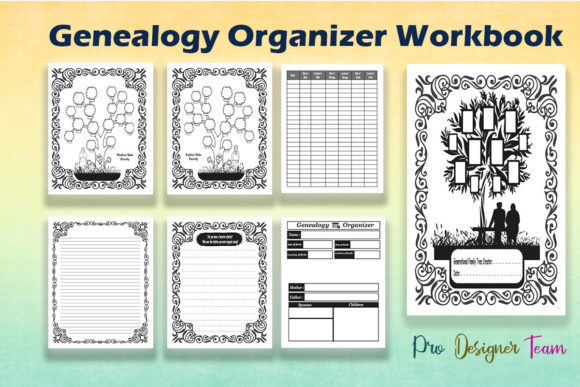
Genealogy isn’t just for retirees or professional historians. It’s a project that fits into the messy reality of modern life. Imagine you’re planning a family reunion. You want to share stories, not just snap photos. A Generational Family Tree section from the workbook gives you a clear framework to visually map out connections, making it easier to explain to cousins and kids who “Great-Uncle Arthur” really was. You’re not just organizing data; you’re creating a shared reference point for a live event.
Or consider the quiet moment after a loss, when you realize you wish you had asked more questions. The Questions to ask my Family pages within a Genealogy Organizer Workbook act as a gentle guide, prompting conversations about childhood memories, hometowns, or life during a particular era. It’s not an interrogation; it’s a curated list that helps you broach topics you might otherwise forget, turning casual chats into invaluable recording sessions.
The Workbook in Action: Different Users, Different Journeys
The utility of this tool shines in how it adapts to different people and their unique starting points.
For the Beginner Building a Foundation
Someone new to family history often starts with themselves. The Family Information and separate Family Tree Mother Side and Father Side sheets provide a logical, step-by-step approach. Instead of facing a blank, intimidating chart, you begin with what you know—your immediate family—and then branch out deliberately to each parental line. This structure prevents overwhelm and builds confidence as your tree grows methodically from its trunk.
For the Seasoned Researcher Consolidating Work
If you’ve been researching for years, your challenge isn’t starting, but synthesizing. Digital databases and old census records are fantastic, but they live on screens. Printing out a Genealogy Organizer Workbook and transcribing your key findings into its formatted pages creates a master physical copy. This becomes your backup, your review document, or the clean version you share with family members who prefer paper. It’s the act of compilation that often reveals gaps or inconsistencies in your research you might have missed scrolling through files.
For the Creative Storyteller or Educator
Genealogy isn’t only about lineage; it’s about narrative. A teacher might use the workbook’s templates to create a classroom project on local history. A writer might use the organized data as the skeleton for a family memoir. The workbook provides the standardized structure—the dates, names, and relationships—freeing you to focus on the richer task of weaving those facts into stories, lessons, or art.
Considering Your Approach Before You Begin
While the workbook is designed to simplify, a little forethought can make your experience even more effective. First, consider your primary goal. Are you aiming for a complete, documented lineage, or are you more interested in capturing living memories and stories? The workbook supports both, but knowing your emphasis helps you decide which sections, like the Genealogy Organizer pages for research logs, or the family question prompts, you’ll use most intensely.
Think about collaboration. Is this a solo project, or will you involve siblings, parents, or your own children? Having a Genealogy Organizer Workbook as a central, physical document can facilitate this. You can pass relevant pages to others to fill out, making it a cooperative effort rather than a one-person marathon.
Also, acknowledge the nature of the work. Genealogy involves both exciting discoveries and frustrating dead ends. The workbook gives you a place to record both—the confirmed birth certificate details and the mysterious “where did that family rumor come from?” notes. Its strength is in providing a consistent home for all stages of the process, not just the successes.
The Tangible Advantage of a Ready-to-Print Format
The specification of being a 100-page PDF, tested for KDP and ready to print at the popular 8.5 x 11 inches, speaks to a very practical reality. You aren’t buying a generic binder; you’re getting a product specifically formatted for clean, home or professional printing. This removes the design hurdle. For many, the act of writing in a physical book fosters deeper focus and connection than typing into a spreadsheet. It creates a single, persistent artifact of your journey that doesn’t get lost in a software update or a forgotten password.
A potential limitation, of course, is that it’s static. New information requires you to write or re-print. This isn’t a dynamic database. But that’s also its potential strength: it forces curation and decision. You write down what is verified or truly meaningful, moving from collecting everything to compiling what matters. It’s the difference between having a folder of 1000 digital documents and a thoughtfully filled book you can open and comprehend in seconds.
Beyond Personal Use: A Tool for Small Businesses
For those exploring low-content publishing, this workbook represents a solved problem. It’s a complete, tested interior ready for upload. This allows entrepreneurs to focus on marketing and customer outreach rather than wrestling with page layout and bleed settings. The audience for such a product is real—people actively seeking a structured aid for a passionate project—making it a practical offering in a creative business model.
Ultimately, a Genealogy Organizer Workbook is more than a checklist. It’s a companion for a deeply human endeavor. It meets you in your real-world scenarios—at the reunion, during the afternoon visit with an elder, in the quiet of your own research session—and provides the scaffolding on which you can build a more connected, understood, and preserved family story. It turns the wish to “get organized” into a tangible, page-by-page process.