The Editable 12 Weeks Savings Challenge: A Practical Blueprint for Financial Discipline
In a world where financial goals often feel distant and budgets seem abstract, structured challenges offer a powerful antidote. The Editable 12 Weeks Savings Challenge represents a focused, systematic approach to building a savings habit. Unlike generic advice, it provides a tangible framework, breaking down significant targets like saving $1000, $1500, or $3000 into manageable weekly increments. This method transforms the overwhelming concept of “saving more” into a clear, actionable plan, making financial progress visible and achievable within a defined timeframe.
The Rise of Structured Financial Tools in Modern Planning
Modern financial management has evolved beyond simple spreadsheets and good intentions. Today's professionals, freelancers, and creators seek tools that integrate seamlessly with their dynamic lifestyles. The popularity of savings challenges speaks to a broader trend: the desire for accountability, structure, and visual progress tracking. In an era of digital distraction and fluctuating incomes, a 12-week plan acts as a commitment device, anchoring financial intentions in a concrete routine. It fits perfectly into the contemporary preference for bite-sized goals, gamified productivity, and results-oriented systems that deliver measurable outcomes.
Beyond Personal Use: The KDP Interior for Creators and Entrepreneurs
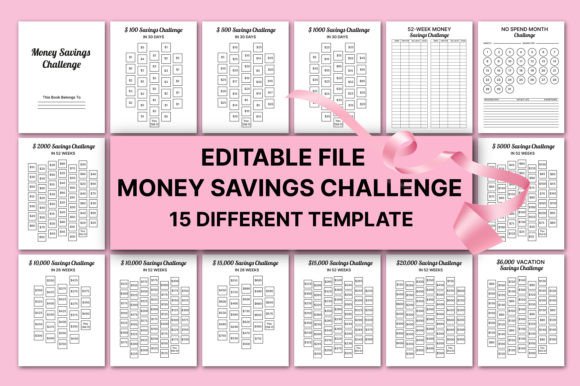
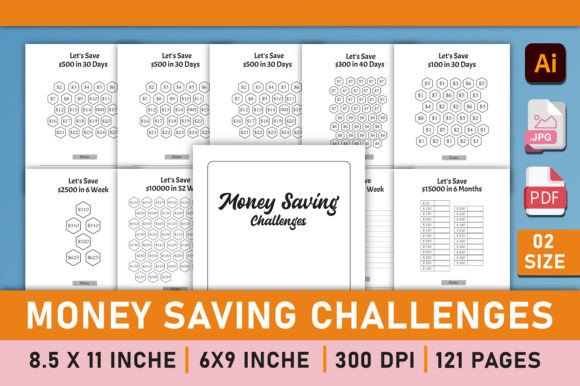
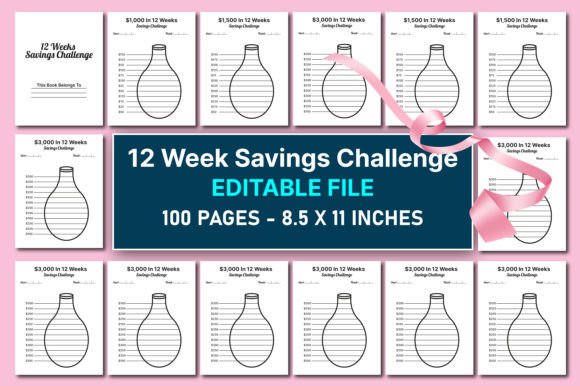
The utility of the Editable 12 Weeks Savings Challenge extends beyond personal finance. Recognizing the needs of the thriving creator economy, the challenge has been expertly adapted into a professional product: the Editable 12 Weeks Savings Challenge For KDP Interiors. This offering caters directly to entrepreneurs, bloggers, and side-hustlers looking to publish their own financial planning tools on platforms like Amazon KDP.
This evolution highlights a significant shift. Financial content is no longer just for consumption; it's a viable product category. By providing a high-quality, print-ready PDF file that is ready to upload, the package empowers creators to enter the market quickly. The specifications are meticulously tailored for commercial success: 100 pages, formatted for the standard 8.5 x 11 inches without a bleed area, ensuring compatibility with KDP's print requirements. Crucially, it is KDP tested, uses CMYK color for accurate printing, and maintains a resolution of 300 PPI for crisp, professional quality. This removes technical barriers, allowing creators to focus on marketing and audience building rather than graphic design complexities.
The Practical Implications for Users and Publishers
For the end-user, the challenge offers a straightforward path. Whether aiming for the $1000, $1500, or $3000 goal in 12 weeks, the editable file allows for personalization. Individuals can adjust categories, tailor weekly deposit amounts to their income cycle, and integrate the plan into their unique financial landscape. This flexibility is key, as a rigid plan often fails; an adaptable one fosters lasting habit change.
For the publisher or creator, the implications are business-oriented. This interior product solves a common pain point: sourcing reliable, specification-perfect content for low-content books. Instead of investing hours in design and testing, one can acquire a proven, market-ready template. The editable nature means it can be branded, slightly modified, or combined with other content to create a unique offering. This efficiency aligns with modern entrepreneurial workflows, where leveraging quality assets to accelerate product launches is a standard practice.
Integrating the Challenge into Changing Financial Habits
Financial wellness is increasingly viewed as a component of overall well-being. The 12-week timeframe of this challenge is psychologically astute. It is long enough to instill a real habit—research suggests habits solidify over approximately three months—but short enough to prevent fatigue and maintain motivation. This makes it particularly relevant for adults navigating career transitions, freelance work, or aiming to fund a specific project or vacation.
Moreover, the tangible outcome—a substantial saved amount after a quarter—provides a concrete reward. This contrasts with vague, open-ended saving, which often lacks the satisfaction needed to reinforce the behavior. The challenge framework turns saving into a series of small wins, building confidence and financial capability week by week.
Realistic Applications and Recommendations
Consider a freelance graphic designer using the $3000 in 12 weeks plan to build a buffer for new equipment. By editing the challenge sheet to align with expected payment dates from clients, they create a customized savings rhythm. Alternatively, a couple might use the $1500 plan to fund a holiday, entering their joint contributions each week. The editable file becomes a collaborative financial document.
For a creator on KDP, the recommendation is to use the interior as a core product but consider value-added strategies. Perhaps bundle it with a digital planner, or create a series targeting different savings goals. The high-quality, print-ready files ensure the final printed book meets customer expectations for clarity and professionalism, which is paramount in the competitive self-publishing marketplace. Following the creator’s profile for new products becomes a smart way to stay updated on similarly tested, specification-ready assets, streamlining the entire product development pipeline.
Why Structured Savings Tools Gain Traction
The attention paid to tools like this reflects a growing disillusionment with purely digital, automated finance management. While apps track spending, they often lack the proactive, planning element. A physical or printable challenge sheet engages differently. It requires active weekly engagement, turning saving into a deliberate ritual. This manual process can enhance mindfulness about money, a benefit that automated transfers sometimes bypass.
Furthermore, in the content creation market, products that solve specific, technical problems—like KDP specification compliance—are highly valued. The assurance that a file is “KDP tested” and includes “CMYK color, 300 PPI” is not just a feature list; it is a promise of reliability and reduced risk for the publisher. This addresses a core business need: minimizing publishing errors and returns due to formatting issues.
Ultimately, whether used as a personal financial blueprint or a commercial publishing asset, the Editable 12 Weeks Savings Challenge and its KDP interior variant represent a pragmatic response to contemporary needs. They offer structure in an area often characterized by uncertainty, and provide a quality-assured solution in a marketplace demanding technical precision. By focusing on actionable steps and professional execution, they turn the admirable goal of saving money into a achievable plan and a viable product.