The Semester Planner for KDP Interiors: A Detailed Evaluation for Content Creators
For individuals exploring the world of self-publishing on Amazon's Kindle Direct Publishing (KDP) platform, particularly within the educational and planner niches, the term Semester Planner for KDP Interiors represents a specific type of product offering. It refers not to a single planner, but to a category of ready-made, professionally designed digital files intended for KDP publishers. These products are sold as digital interiors—the inside pages of a book—which creators can upload directly to Amazon KDP to produce a physical, printed planner. Understanding what these interiors entail, their distinct characteristics, and how they compare to other approaches is crucial for making an informed publishing decision.
What Exactly Are Semester Planner KDP Interiors?
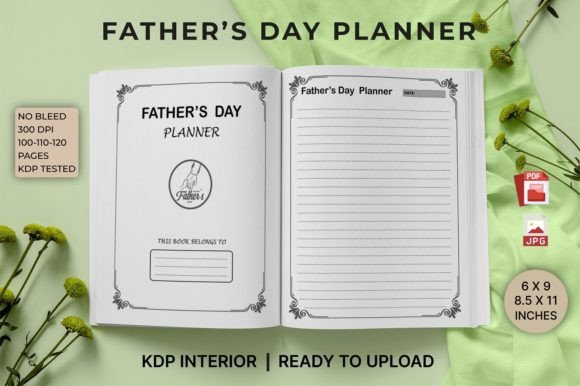
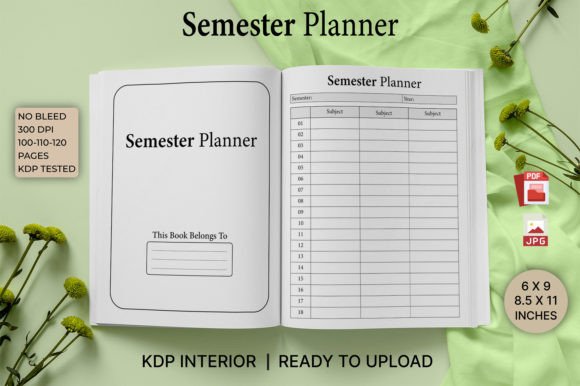
In essence, a Semester Planner for KDP Interiors is a bundle of digital files designed to form the complete interior layout of a semester-based academic planner. The core offering typically includes high-quality, print-ready PDF files that are formatted to meet Amazon KDP's strict specifications. These PDFs are the primary file you upload to the platform. Often, supplementary JPG files are also provided, which can be useful for previews or marketing. The design is original, created specifically for this purpose, and comes in popular trim sizes like 6x9 inches or 8.5x11 inches. The page count is predefined, commonly ranging between 100 to 120 pages. Crucially, these files are prepared in CMYK color mode at 300 DPI resolution, ensuring professional print quality, and are usually set up with "No Bleed," which simplifies the printing process for standard interiors.
The distinct value here is the turnkey nature of the product. Instead of spending hours or days designing layouts, calculating page counts, configuring margins, and ensuring technical compliance, a publisher acquires a ready-to-upload package. This shifts the creator's focus from design and technical setup to marketing, sales, and perhaps minor customization.
Comparing Approaches: Ready-Made Interiors Versus Custom Design
When considering publishing a semester planner on KDP, creators generally face two primary pathways: using pre-designed interiors like a Semester Planner for KDP Interiors or investing in custom design.
The Ready-Made Interior Route
This approach, exemplified by the Semester Planner for KDP Interiors products, offers significant advantages in terms of speed and cost-efficiency. The upfront investment is typically a one-time purchase price for the digital files. The technical hurdles are removed, as the files are already sized correctly, have proper margins, and are in the required PDF format. This is an excellent fit for publishers who have strong marketing skills but limited graphic design expertise or time. It also allows for rapid testing of market niches—you can launch a product quickly to gauge demand.
However, tradeoffs exist. The design is fixed. While you own the files and can publish the planner, the layout, color scheme, and specific page order are as provided. This limits branding uniqueness. Your planner will look identical to others who purchase the same interior file, potentially leading to market saturation for that specific design. Furthermore, the content is static; if you want to add a unique section or modify the calendar structure, you’ll need design software and skills to alter the PDF, which can be complex.
The Custom Design Alternative
The alternative is to hire a designer or use design software yourself to create a unique semester planner interior from scratch. This path offers maximum control and differentiation. Your planner can have unique features, tailored sections for specific audiences (like graduate students or specific majors), and cohesive branding that matches your other products. It establishes a truly proprietary product.
The tradeoffs, conversely, involve higher resource allocation. Custom design requires a substantial time commitment if done personally, or a significant financial investment if hiring a professional. You are also responsible for ensuring all KDP specifications—trim size, margins, CMYK, 300 DPI, and PDF export settings—are met perfectly, which can involve a learning curve and risk of rejection during KDP’s review process.
Evaluating the Fit: When is a Semester Planner Interior the Right Choice?
The decision to use a Semester Planner for KDP Interiors package hinges on your goals, resources, and the specific market you're targeting.
It may be the right choice if your primary objective is to enter the planner market quickly with a professionally designed product while minimizing upfront design costs. It fits well for creators who are testing the KDP ecosystem or who operate in a "fast portfolio" model, publishing multiple titles across different niches. If your competitive advantage lies in your marketing, audience building, or SEO for the book listing rather than in a uniquely beautiful interior, then a high-quality ready-made interior can be a perfectly strategic resource.
This option also suits those publishing complementary materials. For instance, if you already sell study guides or academic workbooks, adding a standard semester planner as a companion product using a pre-designed interior can be a logical and efficient expansion.
Limitations and Considerations for the Informed Buyer
Even when opting for a ready-made interior, informed evaluation is key. The promise of "high-quality ready to upload PDF Files" should be scrutinized. Not all offerings are equal. A reputable provider will transparently list the specifications: the exact trim size, page count, and confirmation of CMYK and 300 DPI. The mention of "No Bleed" is important—bleed settings are needed if design elements extend to the edge of the page, which is less common in standard planners and simplifies your upload.
A practical consideration is page count flexibility. A Semester Planner for KDP Interiors with 100-110-120 pages is designed for a standard academic semester. Consider whether your target audience might need a planner covering a full academic year (which would require more pages) or a shorter quarter system. The fixed page count is a limitation if your niche requires deviation.
Another factor is customization potential. While the file is provided as a finished PDF, some creators use tools to add a custom cover or insert a few additional pages at the front or back. However, deep structural changes are usually impractical. Therefore, evaluate the interior's layout thoroughly before purchase. Does the weekly layout match how students plan? Are there adequate sections for goal setting, project tracking, or grade logs? The design's functional utility, not just its aesthetics, determines the final product's success.
Beyond the Purchase: The Publishing Context
Acquiring a Semester Planner for KDP Interiors is only one step in the publishing process. The interior files must be paired with a professionally designed cover that meets KDP’s separate cover specifications and dimensions. The creator then combines these in the KDP upload interface, sets the pricing, and handles the listing details. The quality of the interior file simplifies one major component, but success depends on the entire package and its market positioning.
In this context, these interior products serve as a specialized tool. They are comparable to purchasing a high-quality template for a website or a presentation. They provide a solid, reliable foundation that adheres to industry standards, allowing you to focus your energy on other value-adding activities. For a creator with a clear plan for marketing and distribution who values efficiency over total creative control, this tool can be highly effective.
Ultimately, the choice between a pre-designed Semester Planner for KDP Interiors and a custom-designed path depends on a balance of priorities: speed versus uniqueness, cost versus control, and testing versus brand building. By understanding the exact offerings, specifications, and inherent tradeoffs of the ready-made interior route, creators can make a more confident and strategic decision for their KDP publishing venture.