The Strategic Value of a Desk Weekly Planner for KDP Publishing
In the world of self-publishing, particularly on platforms like Amazon Kindle Direct Publishing (KDP), success often hinges on the details of execution. While the core product—your book or planner—is paramount, the professional presentation of its interior can be a decisive factor in market perception and customer satisfaction. This is where a specialized tool like the Desk Weekly Planner KDP Interior enters the strategic picture. It is not merely a template; it is a professionally designed, fully editable foundation for creating a functional and aesthetically pleasing weekly planner. For entrepreneurs, creators, and professionals venturing into the lucrative planner market, understanding and leveraging such a resource can streamline production, enhance brand consistency, and directly impact long-term business outcomes.
Beyond the Template: A Foundation for Functional Design
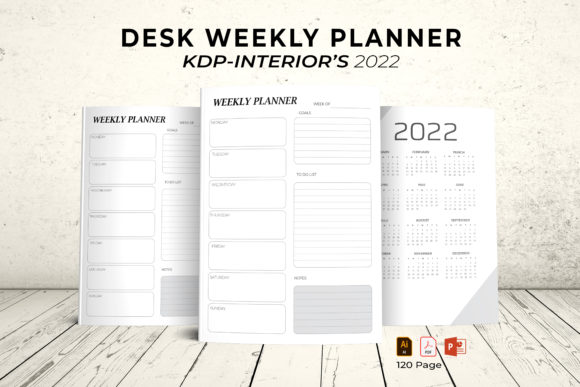
At its core, the Desk Weekly Planner KDP Interior is a complete digital package. It provides a 120-page layout for a weekly planner, anchored by a 2022 calendar, formatted to the standard US Letter size (8.5 x 11 inches). The key strategic advantage lies in its flexibility: it is offered in multiple file formats including Adobe Illustrator (AI/EPS), Microsoft PowerPoint (PPT), JPEG, and a print-ready PDF. This multi-format approach is a practical consideration that accommodates varying levels of technical skill and access to software. Whether you are a graphic designer comfortable with vector editing in Illustrator or a marketer preferring to adjust layouts in PowerPoint, the package provides a starting point that reduces technical barriers.
The inclusion of 100 fully editable, resizable vector shapes is particularly valuable. These elements are not static decorations; they are modular components that can be repurposed, recolored, and rearranged to align with your specific branding or thematic vision. This transforms the interior from a generic template into a customizable framework. You can maintain a high-quality, 300 DPI print-ready standard while injecting your unique identity, a crucial step in building a recognizable product line in a crowded marketplace.
Strategic Applications in Publishing and Productivity
How can a practitioner approach this tool with intentionality? Its primary use case is, of course, for publishing a physical or digital weekly planner for sale on KDP. The ready-to-upload PDF with no bleed ensures compliance with KDP's printing specifications, minimizing the risk of rejection or costly errors. However, its utility extends beyond direct sales.
- Brand Development: For small business owners or coaches, a customized planner can serve as a high-value lead magnet or branded merchandise, reinforcing professional identity and providing practical value to clients.
- Operational Efficiency: Freelancers and educators can adapt the interior for internal use, creating standardized planning documents for projects, coursework, or team management without investing in custom design from scratch.
- Market Testing: The editable nature allows for rapid iteration. You can create multiple color variants or layout tweaks to test different market niches without commissioning new designs for each experiment.
The thoughtful use of this Desk Weekly Planner KDP Interior supports not just productivity for the end-user, but also the operational productivity and strategic agility of the publisher.
Intentional Customization: Aligning Design with Goals
A significant risk in using any pre-made interior is the temptation to treat it as a finished product rather than a foundation. Uploading it without modification may result in a planner that feels generic and fails to connect with a target audience. The strategic approach involves a clear pre-production phase.
Before opening the Illustrator or PowerPoint file, define the goals for your planner. Is it aimed at busy professionals seeking minimalist clarity? Is it for students needing motivational quotes and study trackers? Your audience's needs should dictate how you customize the vector shapes, colors, and page flow. Consider the user experience: the placement of the weekly calendar, the space allotted for notes, the readability of the font. These are decisions that affect the planner's daily utility and, consequently, its reviews and repeat purchase potential.
Practical customization steps might include:
- Using the editable file to incorporate your brand’s color palette and logo, creating a cohesive extension of your visual identity.
- Resizing or repositioning the 100 vector shapes to create unique section headers, icons, or decorative elements that support the planner's theme.
- Adding targeted content in the note sections, such as goal-setting prompts, weekly reflection questions, or industry-specific trackers, thereby increasing the product's perceived value.
This process turns a technical resource into a strategic asset, embedding your unique value proposition into the product itself.
Planning for Production and Long-Term Value
The inclusion of a 2022 calendar anchors the product to a specific year, which is a key consideration for timing and marketing. For a practitioner, this means planning launches well in advance of the target year to capture early buyers. It also highlights the potential for creating an annual series. Using the same editable interior foundation each year—simply updating the calendar and making incremental improvements—can build a sustainable publishing stream with recurring customers.
From an operations standpoint, the “easy to edit” and “print-ready” features translate to cost and time savings. You bypass the need for extensive graphic design hours for base layouts. The high-quality vector files ensure that if you decide to scale production or offer the planner through other print-on-demand services, the assets remain robust and adaptable. This long-term reusability is a hidden strategic benefit, allowing you to allocate resources to marketing, customer engagement, or product development instead of recurring design overhead.
Risks and Considerations: Avoiding Common Pitfalls
While the Desk Weekly Planner KDP Interior offers significant advantages, relying on it without clear context can lead to suboptimal results. One risk is market saturation. Since the base interior is commercially available, other publishers may use it. Your customization strategy is your primary defense against blending into a sea of similar-looking products. Another consideration is software dependency. Although multiple formats are provided, substantial design changes are easiest in a vector editing program like Illustrator. Without access or skill, your customization may be limited to the PowerPoint or more basic levels.
Furthermore, the “no bleed” specification is perfect for KDP's standard interior but may not be suitable for all print shop requirements if you pursue alternate distribution channels. Always verify the print specifications of your chosen provider. Finally, the planner is a tool. Its success in the market depends fundamentally on your understanding of your audience's planning needs and your ability to communicate how your customized version solves their specific problems. The interior file handles the design framework; you must provide the strategic vision and market insight.
Conclusion: A Tool for Empowered Publishing
Ultimately, the Desk Weekly Planner KDP Interior serves as a bridge between creative vision and commercial reality. It empowers entrepreneurs, marketers, and creators by providing a reliable, high-quality starting point that is both professional and adaptable. By approaching it intentionally—with clear goals for customization, a deep understanding of the target user, and a strategy for long-term product development—you can transform this editable foundation into a distinctive product that supports your audience's productivity and your business's growth. In the strategic landscape of KDP publishing, such resources are not shortcuts; they are enabling technologies that let you focus on what matters most: creating value and building a sustainable publishing practice.