The Strategic Value of a Diet Planner KDP Interior for Self-Publishing Entrepreneurs
The world of self-publishing, particularly through Amazon Kindle Direct Publishing (KDP), offers a unique avenue for entrepreneurial creativity and income. Within this space, low and no-content books like planners, journals, and trackers have carved out a significant niche. For the savvy publisher, these products represent not just a quick publication but a scalable business model. A Diet Planner KDP Interior is more than a simple template; it’s a foundational asset that can streamline your operations, enhance your branding, and directly impact your publishing results.
Understanding the Diet Planner KDP Interior as a Business Tool
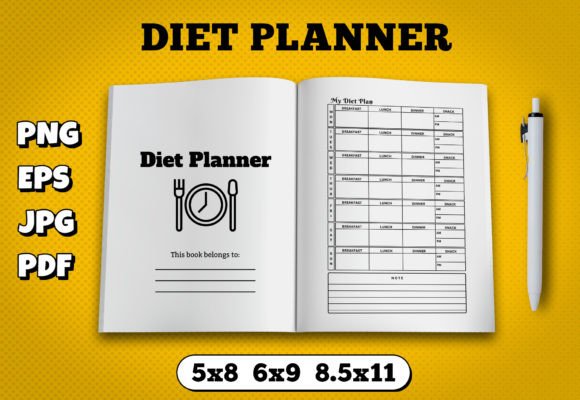
A Diet Planner KDP Interior is a professionally designed, ready-to-use manuscript template tailored for creating a diet or nutrition planner book. Typically delivered in multiple print-ready file formats (such as PDF, JPG, PNG, EPS) and standard KDP trim sizes like 5x8, 6x9, and 8.5x11, it eliminates the need for complex graphic design. This interior provides the structure—the pages, layouts, and sections—while you, the publisher, provide the market insight and strategic positioning.
Its utility is multifaceted. Primarily, it serves as the core product file for uploading to Amazon KDP. But strategically, it’s a versatile digital product. As mentioned, these editable book templates can also be used for physical writing, printing for personal use, or even as a base for creating derivative products. This flexibility turns a single purchase into a reusable resource for testing different markets or formats.
Strategic Applications: Beyond Just Publishing a Book
Thoughtful use of a Diet Planner KDP Interior supports several key entrepreneurial goals. The most immediate is productivity and operational efficiency. Designing a book interior from scratch requires time, skill, and software—resources a new publisher may lack. By starting with a high-quality, simple interior, you dramatically shorten the time-to-market, allowing you to focus your energy on market research, title optimization, and cover design—areas that more directly influence sales.
This efficiency also lowers the barrier to experimentation. You can quickly launch a diet planner into a specific niche (e.g., keto, vegan, intermittent fasting) using the same core interior, assessing demand without significant upfront investment. This approach turns publishing into a data-driven activity where you can iterate based on customer response.
Enhancing Brand Consistency and Customer Experience
If you plan to build a series of planners or expand into related wellness journals, using a cohesive Diet Planner KDP Interior style across your catalog can foster brand recognition. A consistent layout, font choice, and functional design signal professionalism to customers. A well-structured planner that is easy to navigate and use translates to a positive customer experience, which can lead to better reviews and repeat purchases. The black and white ready-to-use Kindle pages are not a limitation but a strategic choice: they ensure clean printing, reduce production costs, and meet the expectations of a practical, utilitarian product.
Planning Your Approach: Key Considerations Before You Begin
Relying on a template requires intentional strategy, not just random execution. Before using a Diet Planner KDP Interior, consider your clear goals. Are you testing the market? Building a flagship product? Complementing an existing blog or coaching business? The template serves your strategy; it shouldn’t define it.
Analyze the market. Search Amazon for existing diet planners. Note what interiors seem popular—are they minimalist, highly detailed, or focused on specific tracking metrics? Your chosen interior should align with these expectations while offering a unique value, perhaps through a better-organized meal log or additional progress-tracking pages.
- Identify Your Niche: Generic diet planners face stiff competition. Use the template as a canvas to target a specific audience.
- Focus on Usability: The interior’s layout must be logical for the end-user. Think through the customer’s journey—from goal setting to daily logging.
- Plan for Expansion: Consider how this interior could be slightly modified for a companion exercise log or mindfulness journal, creating a cross-selling opportunity.
Practical Integration into Your Publishing Workflow
Once you’ve selected your Diet Planner KDP Interior, the practical steps are straightforward. The provided ZIP folder containing all digital files in multiple formats is your toolkit. The PDF file, ready to upload on Amazon KDP, is your main asset. However, the other formats (JPG, PNG, EPS) offer strategic flexibility. For instance, you might use PNG images of specific pages for promotional social media posts, showcasing the interior’s clean design to potential buyers.
A crucial step is pairing the interior with a compelling cover design. The interior’s value is realized only when the book is purchased; a professional, niche-specific cover drives that purchase. Think of the interior as the engine and the cover as the marketing.
Potential Risks and the Importance of Intentional Use
While a Diet Planner KDP Interior provides immense convenience, using it without clear context poses risks. The primary risk is publishing a generic, undifferentiated product. The market is saturated with planners that look and feel identical because they use similar templates. Without a unique angle, your book becomes a commodity, competing only on price.
Another risk is over-reliance. Templates can stifle creativity if you view them as a final product rather than a starting point. The “simple interiors” are perfect for a launch, but as your business grows, you may need to invest in custom designs to stand out. Use the template to learn the process and generate initial revenue, then plan for future upgrades based on customer feedback and sales data.
Finally, ensure your product delivers real value. A diet planner interior is a tool for the customer. If the page flow is confusing or lacks necessary sections (like weekly summaries or goal pages), the customer’s experience suffers, regardless of how professionally the file is formatted.
Cultivating Long-Term Value in Your KDP Business
Viewing a Diet Planner KDP Interior as a single transaction limits its potential. Instead, see it as the first brick in building a publishing portfolio. Many successful KDP entrepreneurs operate by creating interconnected series. After launching a diet planner, you might visit the shop for more beautiful KDP interiors like a journal, notebook, organizer, or tracker. This allows you to dominate a thematic vertical—wellness, productivity, creativity—with a cohesive set of products.
This portfolio approach leverages the efficiency of templates while building a brand. Each new book grows your presence on Amazon, increases the chance of bundled sales, and establishes you as a publisher in that category. The long-term result is a business less reliant on individual book hits and more stable through diversified offerings.
The journey from a downloadable ZIP folder to a growing Kindle Direct Publishing business is a strategic one. A Diet Planner KDP Interior provides the perfect start, reducing technical friction. But the true growth comes from your strategic decisions: your niche selection, your marketing, your customer understanding, and your willingness to use these efficient tools not as a crutch, but as a springboard for intentional, value-driven publishing.